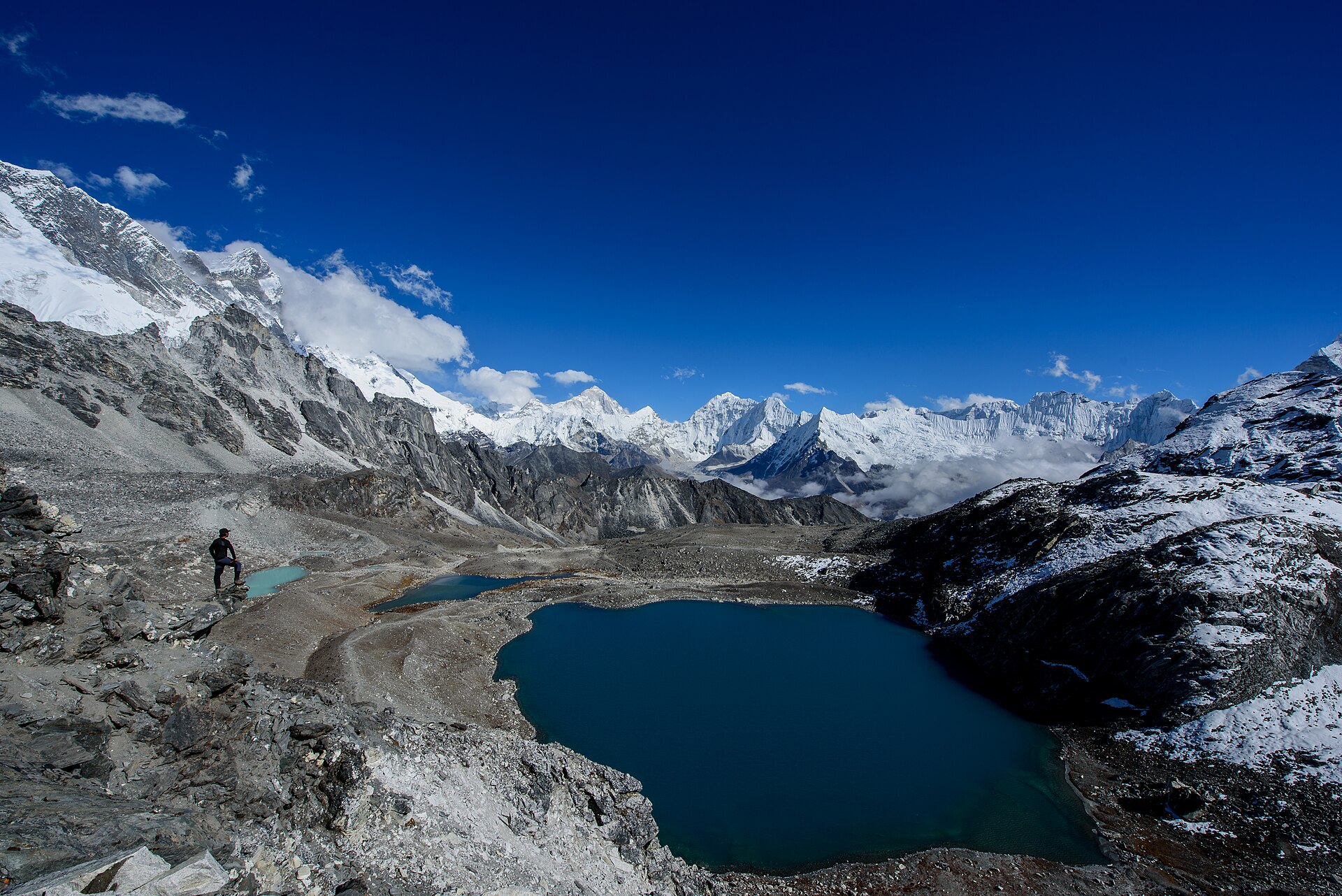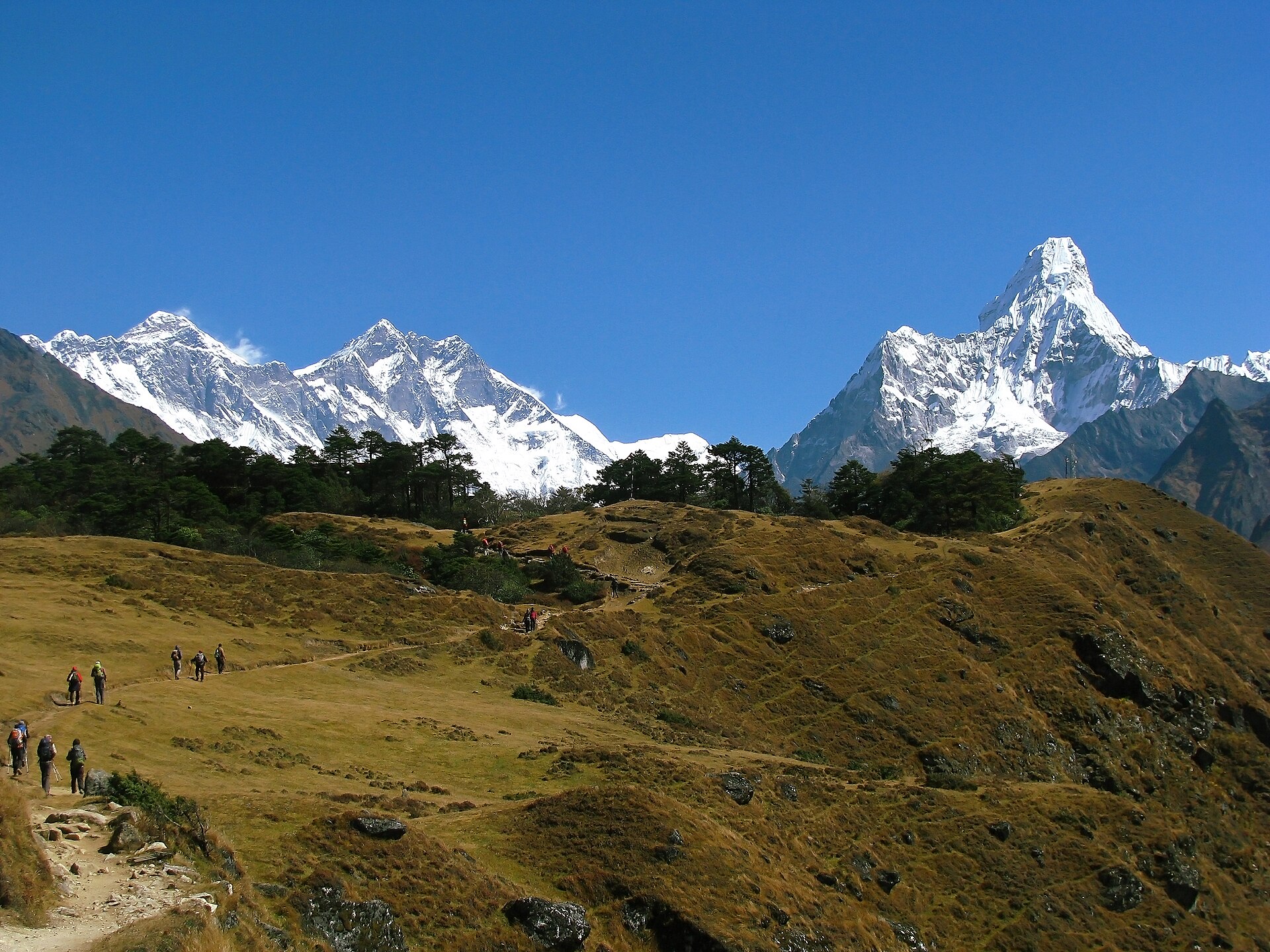
Everest Base Camp needs little introduction: it’s the trek that put Himalayan trekking on the global map, and remains the benchmark by which every other high-altitude trek is measured. The route from Lukla climbs steadily through Sherpa villages and pine forest, gaining altitude gradually enough to allow proper acclimatisation, before the terrain opens into the stark, high-alpine world around the Khumbu Glacier.
Namche Bazaar and Tengboche Monastery are highlights in their own right — a bustling trading town built into a natural amphitheatre, and Nepal’s most significant Buddhist monastery, respectively — before the trail’s final push to the base camp itself, sitting at the foot of the Khumbu Icefall, the notoriously unstable first obstacle on Everest’s climbing route. Most trekkers agree the actual best view of Everest comes not from base camp (where the mountain itself is partially hidden by nearer peaks) but from Kala Patthar, a short, steep pre-dawn climb above Gorak Shep.
Twelve days is enough for proper acclimatisation with two dedicated rest days, but altitude sickness remains a real risk above 4,000m — a measured pace, rather than rushing between famous viewpoints, is the single biggest factor in a safe and successful trip.