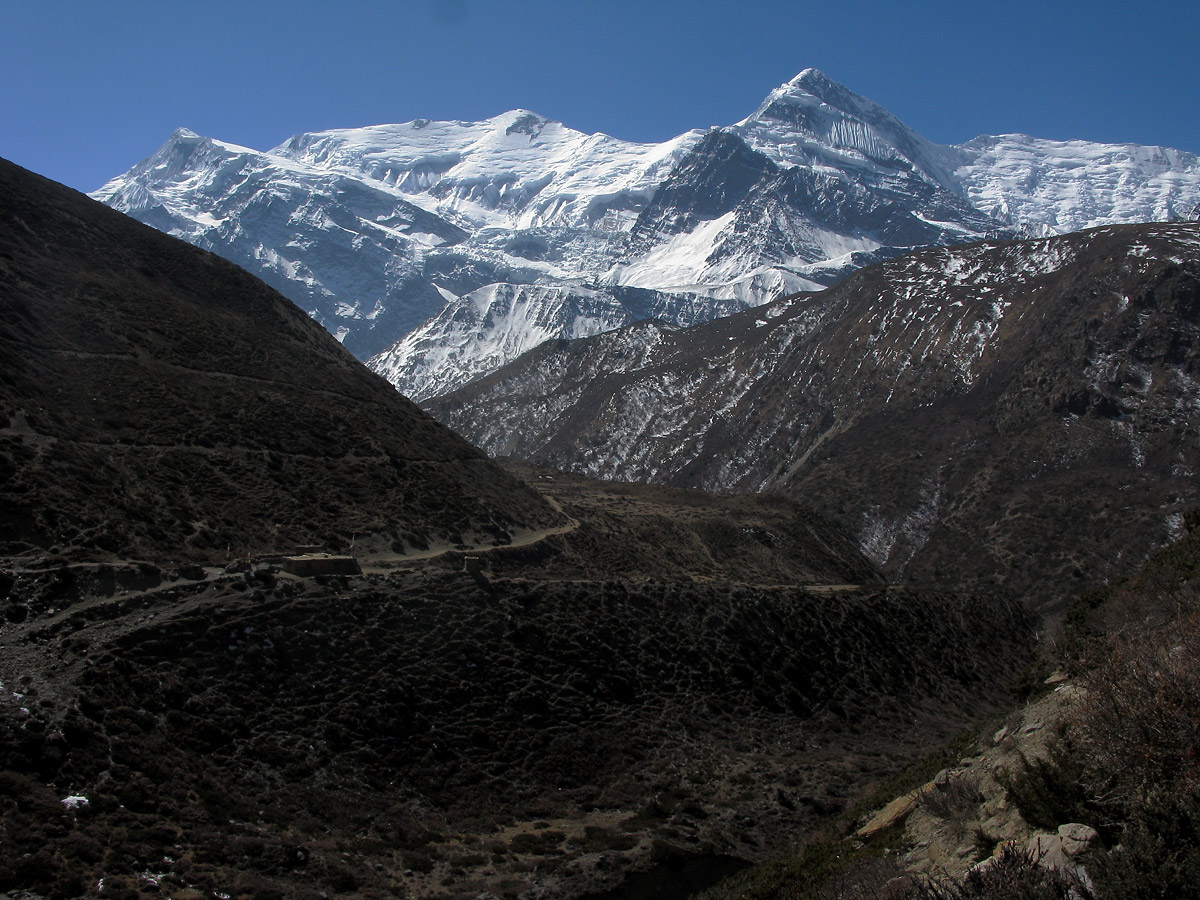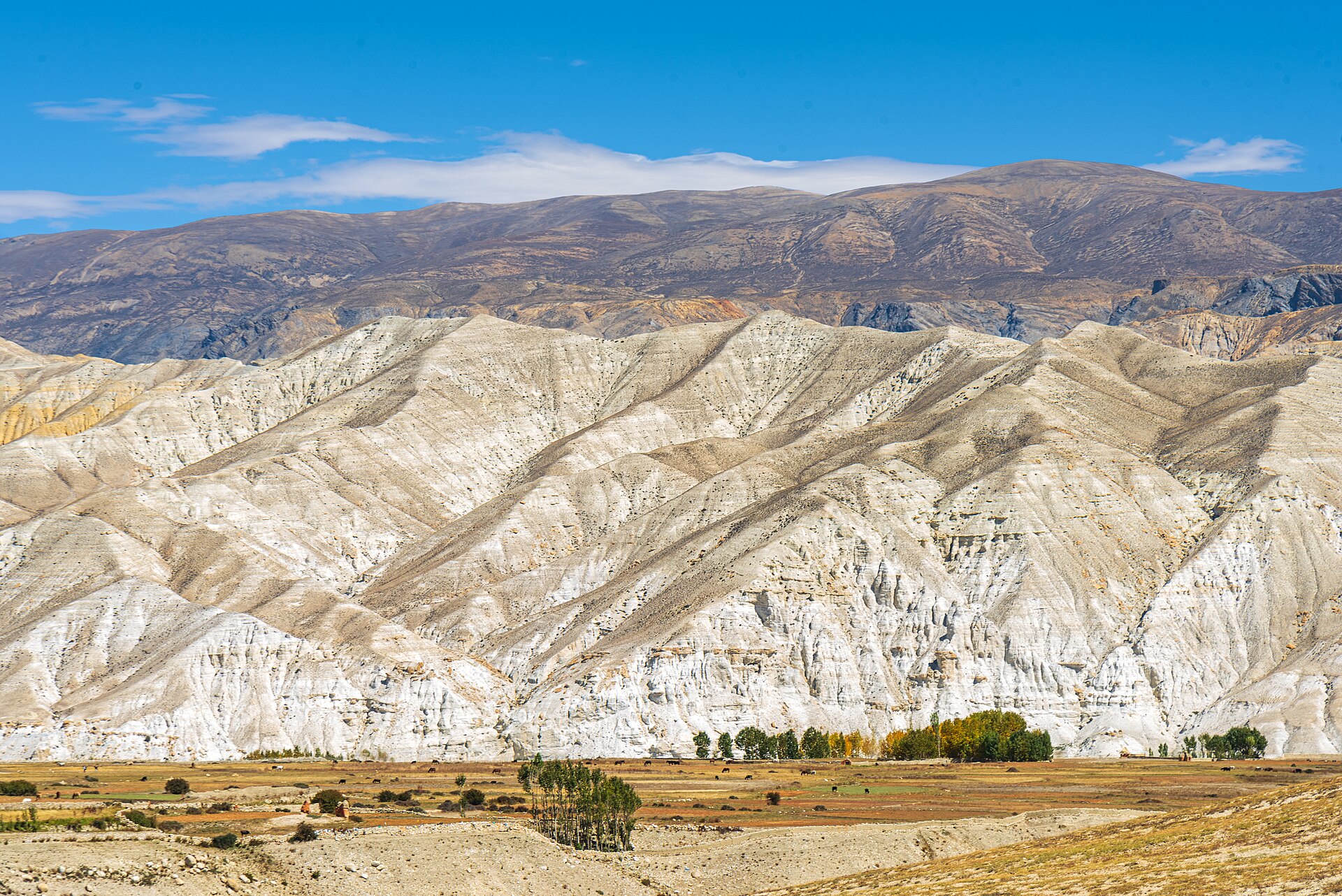
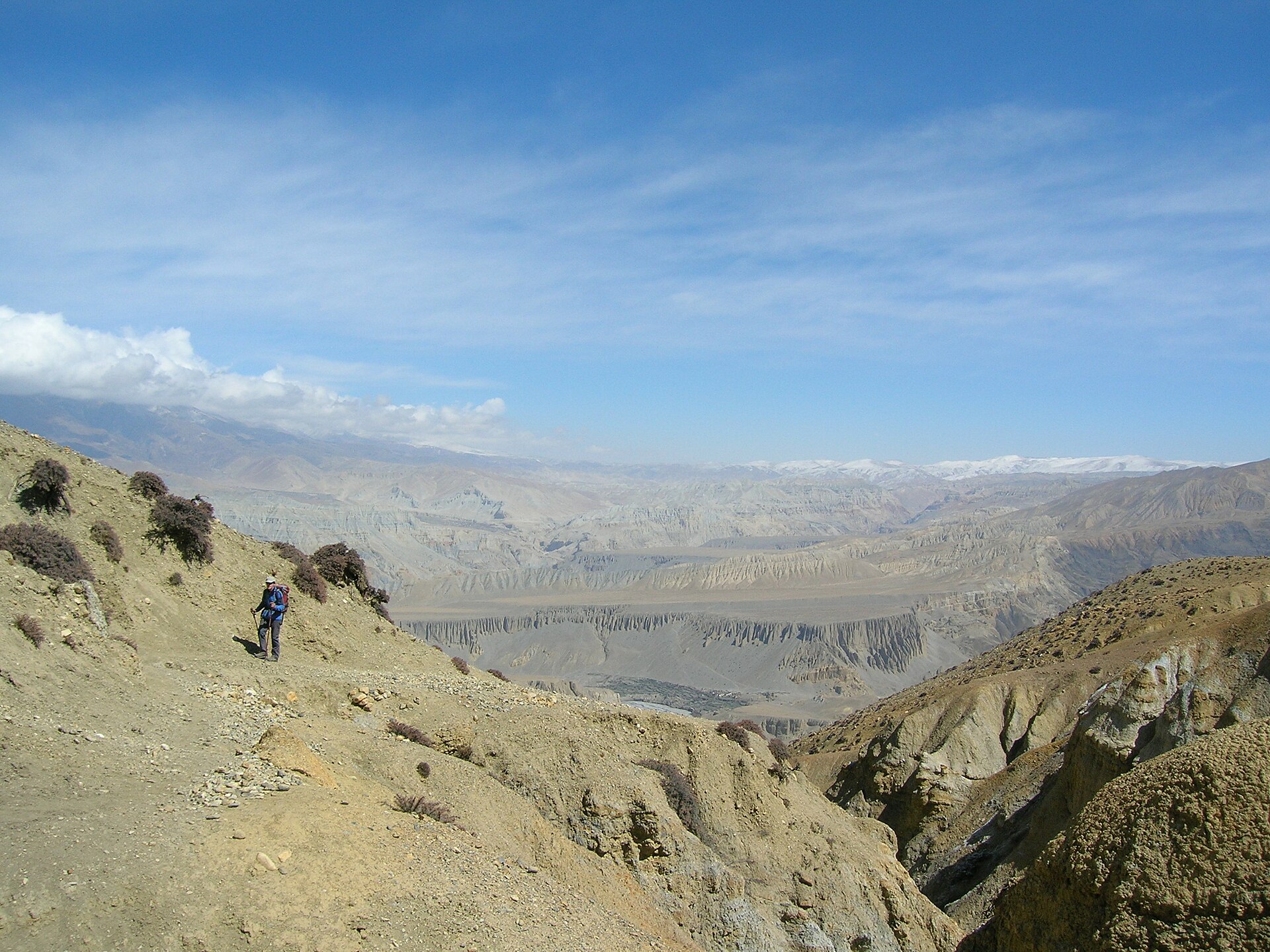
Mustang sits in the rain shadow of the Annapurna and Dhaulagiri ranges, and the result is a landscape utterly unlike the rest of Nepal — a high-altitude desert of eroded canyons, wind-carved cliffs, and ochre-red monasteries that looks closer to the Tibetan plateau than to the lush valleys most people associate with Himalayan trekking. Upper Mustang, a former independent kingdom, was closed to foreign visitors until 1992 and still requires a special restricted-area permit to enter.
The trek to Lo Manthang, Mustang’s walled former capital, passes through a landscape of eroded pinnacles, centuries-old cave complexes, and villages that have preserved Tibetan Buddhist culture in a form increasingly rare even in Tibet itself. Nearby, the Nar Phu Valley — technically part of the Manang district bordering Mustang — offers a similarly restricted, high-desert trekking experience with its own distinct villages.
Trekking season runs March–November, notably wider than most Nepal regions since Mustang’s rain-shadow location means the monsoon barely affects it — making it one of the few Nepal treks worth considering even in July and August. A restricted area permit (with a required minimum group size) and ACAP permit are both necessary and arranged through a registered trekking agency.