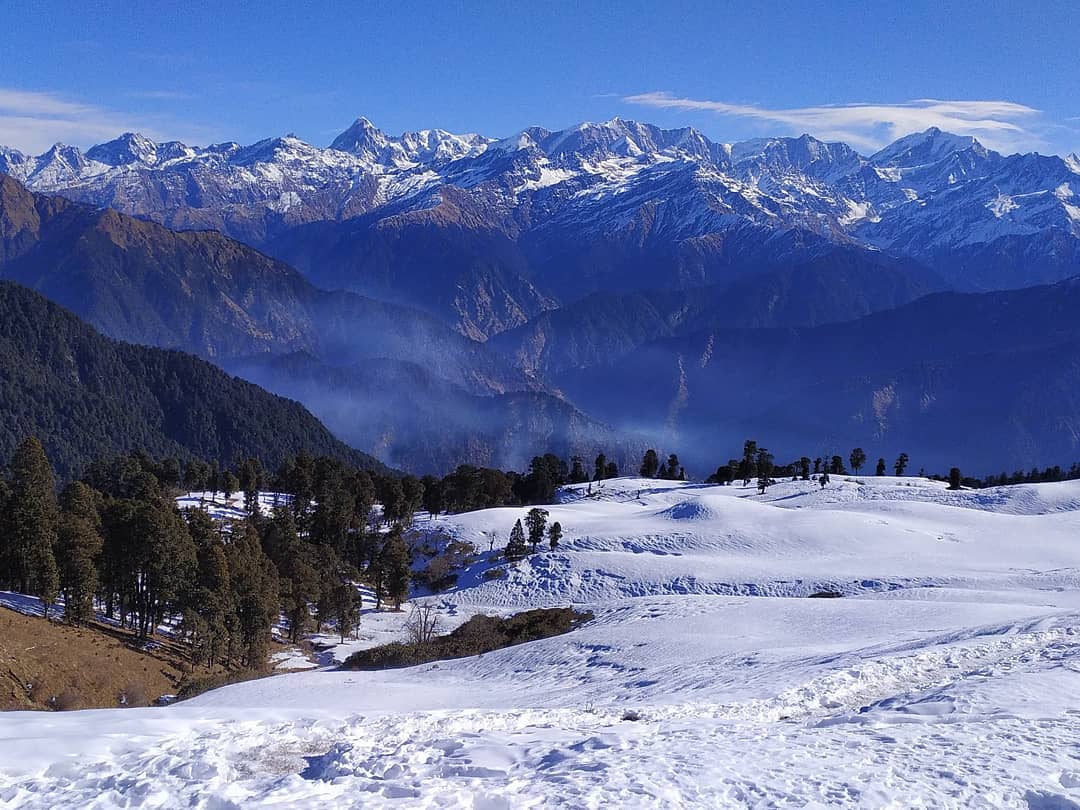
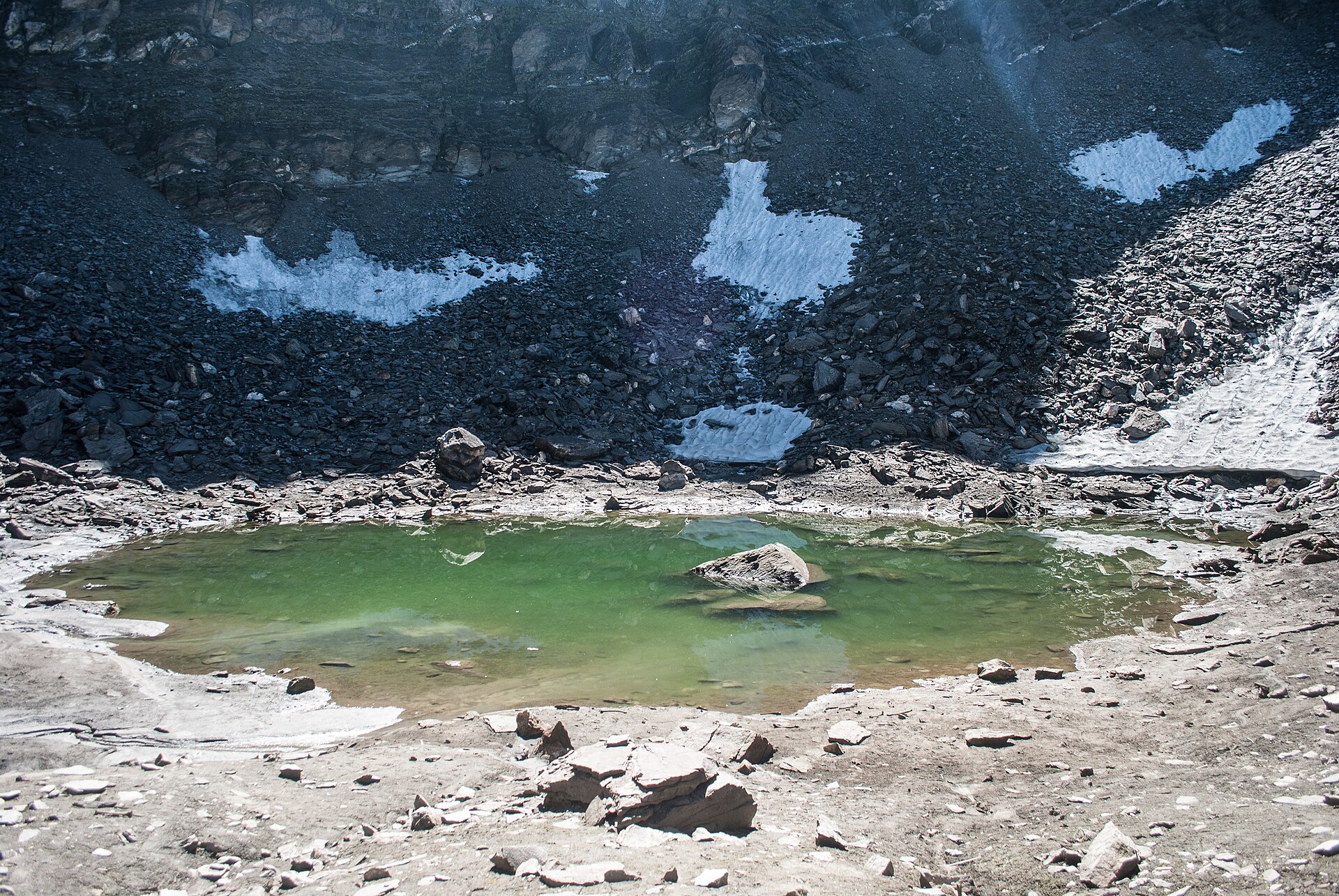
Roopkund earned its nickname — Skeleton Lake — from the centuries-old human remains found scattered around its shallow, ice-fringed waters, first documented by a British forest ranger in 1942 and still the subject of genetic research today. But the mystery is only part of the draw; the route there passes through Ali Bugyal and Bedni Bugyal, two of the largest and most photogenic alpine meadows in the Indian Himalaya, with the Trishul massif rarely out of view.
This is a genuinely difficult trek by Uttarakhand standards: eight days, several nights above 4,000m, and a final push to the lake itself that regularly involves snow crossings even in the late-spring and post-monsoon trekking windows. Altitude sickness is a real risk given the pace of ascent, and most operators build in an acclimatisation-friendly schedule with a buffer day.
The reward for the effort is a trek that feels genuinely remote — Bedni Bugyal in particular is often cited as one of the most beautiful campsites in the Garhwal Himalaya — combined with one of India’s most talked-about archaeological curiosities at trail’s end.